Published: “Is Obesity a Choice?” + podcast
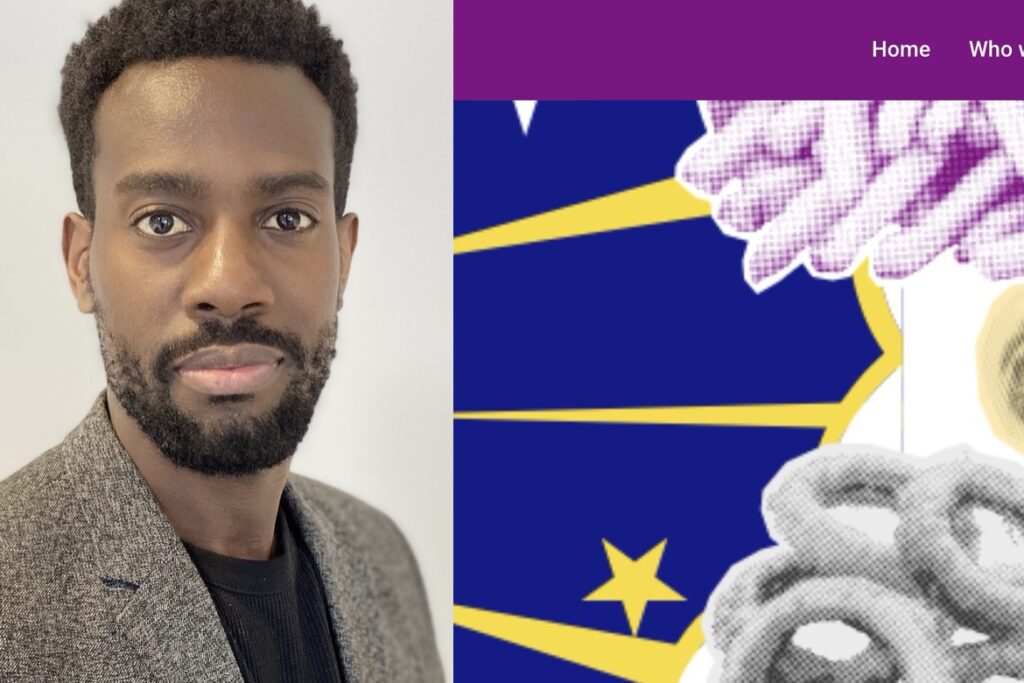
A year ago, NeuWrite Nordic participant Arsène Kanyamibwa, a PhD candidate in the O'Brain Lab at the University of Helsinki's Department of Psychology, brought a long draft of an essay to us to workshop. On the surface, Arsène's essay was about obesity. But under the surface, we came to see that the essay was wrestling with something much deeper: the quest for certainty—or rather, as it turned out, Arsène's quest through scientific research to work and live with uncertainty.
In the early draft of the essay, Arsène had drawn beautifully on personal anecdotes, family reminisces, popular media, and scientific evidence. From these elements he'd woven together a sprawling exploration of traditional foodways, modern lifestyle and technology, and cutting-edge neuroscience in order to explore what we know (and still don't know) about obesity. Subsequently, at our NeuWrite workshop, the diversity of elements in Arsène's text inspired lively reader feedback and discussion, including different options for focusing the project behind one or another key idea.
After the workshop, Arsène went on to spend several months revising the text. Looking back, Arsène told NeuWrite that "my first complete draft was significantly improved based on the extensive feedback". The next step was to work with the editors at The Science Basement to prepare the text for publication. Now, you can read Arsène's finished essay in full, as part of The Science Basement's "myths, mysteries, and misconceptions" series, here!
As a teaser, this is part of what Arsène ended up saying about the question of certainty and science:
I thought the countless hours of studying while running experiments would give me the confidence to say, “No, we have proof; I am right, and you are wrong.” Little did I know that science is not about proof, which is final, but about evidence, which evolves and can change as knowledge grows. Like many, I was drawn to confident arguments full of certainty, declaring hypotheses “proven” to silence doubt. However, my scientific journey was not about selfishly feeding my ego, but about gathering evidence to see if my hypotheses are wrong, changing my mind when the evidence suggests so, and carefully, thoughtfully, and analytically decreasing uncertainty rather than increasing certainty.
This is not a bad lesson for life in general.
As a companion to the published essay, you can also check out this podcast episode: