Posts by Trevor Corson
Reaching resistant readers

How do you get your message to the audience that needs to hear it—especially if they are likely to resist? For that matter, as writers, how do we learn enough about our intended audience that we can meet them where they are? The author of one of the draft texts we workshopped this month faced…
Read MoreA long overdue evolutionary account of women

A New York Times bestselling book comes out of NeuWrite: Scientist and creative writer Cat Bohannon is a long-time member of the NeuWrite creative science-writing workshop group in New York City, where she completed her PhD at Columbia University on the evolution of narrative and cognition. In an inspiration to those of us workshopping our…
Read MoreRevealing problems in medical research in psychology
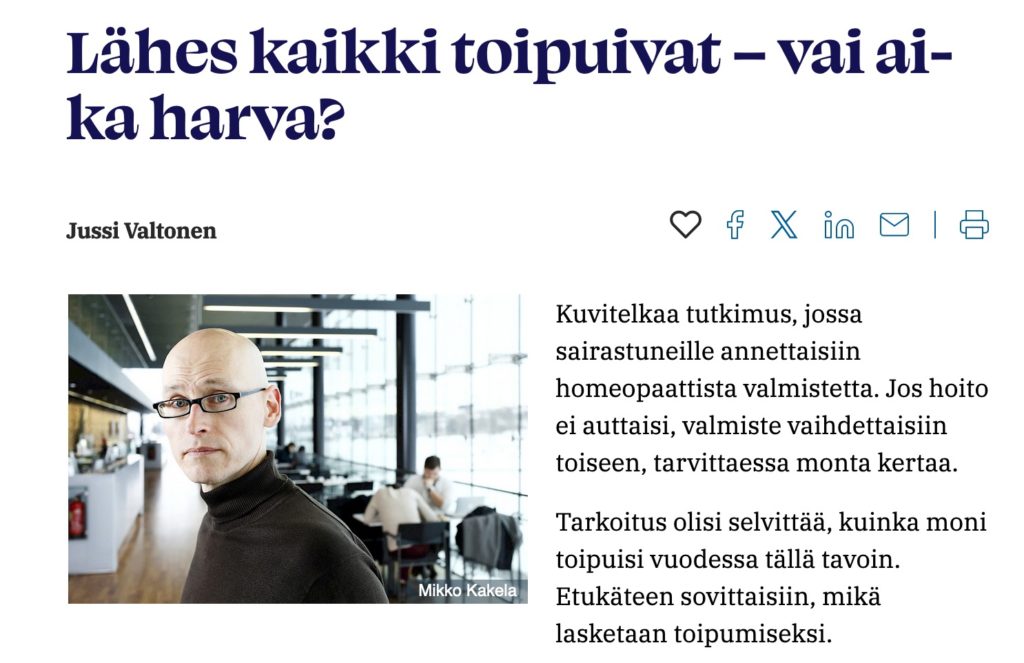
One of the most-read columns this month in the Finnish Medical Journal (Lääkärilehti) was authored by NeuWrite Nordic board member Jussi Valtonen, an award-winning novelist and a researcher in psychology at the University of Helsinki. You can read the column in Finnish here or in English machine translation here (PDF).
Read MoreThe entanglement of subject and object

Sir Isaac Newton thought light consisted of particles, until Thomas Young’s famous “double-slit experiment”, believed to have been performed in 1801, suggested that light actually took the form of waves. But this wasn’t a simple case of “scientific progress”, where an old idea was replaced by a new one. As the philosopher of science Karen…
Read MoreThe shocking truth about scientific utopias

Scientists hate science. Or so it seemed when we read the judges’ comments and the winning stories in the EU-LIFE/Nature essay competition, which had been intended to encourage scientists to write speculative fiction about their ideal future—a scientific utopia. When the submissions flooded in, the judges were alarmed by what they received: What we [had]…
Read More“LGBTIQ+N” sci-fi short story published
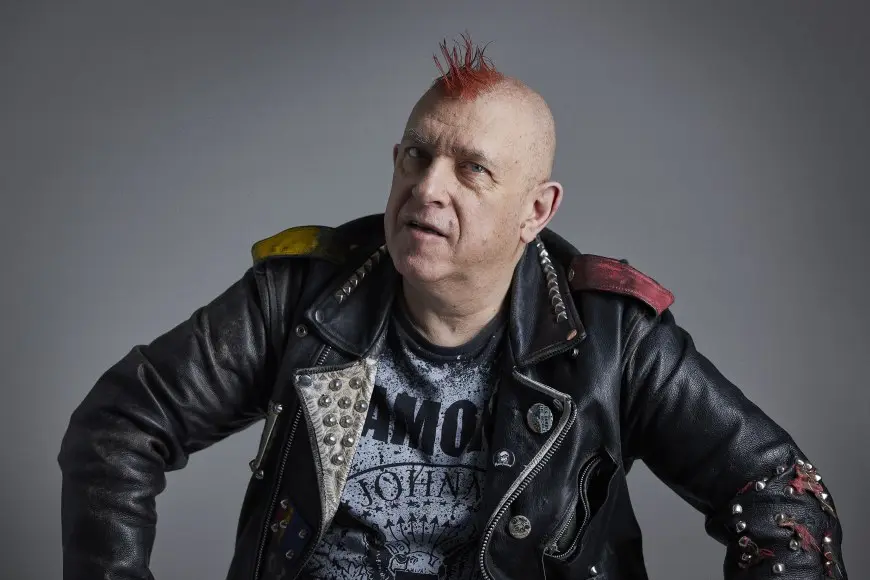
Speculative fiction penned by scientists is rare, but perhaps it shouldn’t be. Recently we workshopped an unusual form of scientific commentary: a one-page sci-fi tale by microbiologist and NeuWrite Nordic advisory board member Howy Jacobs of Tampere University (pictured) that confronted the frightening ethical and political implications of human genetic engineering. This month, Jacobs’ story…
Read MoreUsing dramatic stories to teach

How to get readers interested in the nuances of complex debates over climate policy? Yawn. Unless, maybe, you start your story like this: A typhoon has hit Manila during a UN climate summit, and world leaders are stuck in the basement of a Manila hotel. The American president has a psychological meltdown after a tree…
Read MoreWriting for kids makes us better science writers for adults

One of the senior scientists in our workshop group recently found himself in the impromptu situation of sitting down for a video interview about his complex research on mitochondrial diseases—but the interviewer was a child. The episode reminded us of the famous WIRED magazine video series “5 Levels”, in which “an expert scientist explains a…
Read MoreMedically and genetically engineered dystopias

Science fiction is an especially creative kind of science writing, one that can show us the present in imaginative and emotionally charged ways while also anticipating possible futures. Amidst hopeful talk of scientific and technological progress, science fiction can also reveal injustices, risks, and dystopian futures to correct or avoid. On the other hand, some…
Read More“Humour Me Some Math!” published

At our February meeting we warmed up the dark Nordic winter with a workshop on ways to tap into humor to communicate about science. For good measure we made it as difficult as possible, by choosing what you might think would be one of the intuitively least-funny fields of endeavor: mathematics. Yet lo and behold, …
Read More